

Is Your Pickleball Paddle Past Its Prime?
Hey there, fellow dinker! We’ve all been there: you love your pickleball paddle. It’s been with you through countless games, epic rallies, and maybe even a few accidental dinks into the net (we won’t tell!). But just like your favorite pair of sneakers eventually wear out, your pickleball paddle has a lifespan too. The big question is: how do you know when it’s time to replace a pickleball paddle? A 'dead' paddle can subtly (or not-so-subtly) impact your game, affecting everything from your power to your precision. Let's dive into the five clear signs that your beloved paddle might be ready for retirement.
1. Loss of Power and Pop: The Dreaded Dead Spot
This is often the first and most noticeable sign that your paddle is past its prime. Remember that satisfying 'pop' sound and feeling you used to get when you hit the sweet spot? If your shots are now feeling sluggish, requiring more effort to get the ball over the net, or simply lacking that familiar oomph, your paddle might be going dead. This loss of power is usually due to the internal core of the paddle — whether it's a polymer honeycomb, aluminum, or nomex — starting to break down. Over time, the cells within the core can compress or even collapse, especially with repeated hard hitting. This structural degradation means the paddle can no longer store and return energy to the ball as effectively, leading to that 'dead' feeling. If you're struggling to drive the ball or find your serves are landing short, it’s a big clue.
2. Decreased Control and Spin Capability
Pickleball isn't just about power; it's about finesse! If you're noticing your dinks are less precise, your drops are floating too high, or your spin serves aren't biting like they used to, a dead paddle could be the culprit. The paddle's face material, whether it's a raw carbon face, fiberglass, graphite, or even aluminum, plays a huge role in generating spin and providing control. Over time and with extensive use, the texture on the paddle face can wear down. This reduction in texture means less friction with the ball, which directly translates to less spin potential. Additionally, a compromised core can lead to inconsistent rebound across the paddle face, making it harder to predict where the ball will go. If you're finding yourself making uncharacteristic errors in your short game or struggling to place your shots, consider the state of your paddle face and core.
3. Visible Damage or Warping
Sometimes, the signs are right there for you to see! Take a good look at your paddle. Are there any cracks along the edge guard? Is the face delaminating (peeling away from the core) or showing significant wear patterns where the texture has smoothed out? It's worth noting that while delamination often signals a compromised paddle, in some thermoformed paddles, it can sometimes lead to an initial increase in power due to a 'trampoline effect' before the paddle ultimately fails. What about the edge guard itself – is it separating from the paddle or significantly chipped? Even subtle warping, where the paddle face isn't perfectly flat anymore, can dramatically alter how the ball comes off the paddle, leading to unpredictable shots. While a little cosmetic wear is normal, structural damage like cracks, delamination, or warping is a clear indicator that your paddle's performance is compromised and it's time to think about a replacement. These kinds of damages aren't just cosmetic; they affect the integrity and playability of the entire paddle.
4. Changes in Sound or Feel
Pay attention to your senses! A healthy paddle often has a consistent, crisp sound when striking the ball. If you start hearing a duller thud, a hollow sound, or even a rattling noise from inside the paddle, these are red flags. These auditory clues often point to internal core damage or a loosening of components within the paddle. Similarly, how the paddle feels in your hand can change. If you notice excessive vibration upon contact that you didn't feel before, it could mean the paddle's dampening properties have diminished due to core breakdown. While not always obvious, a shift in the sound or feel of your paddle can be an early indicator of internal wear and tear that will eventually lead to a dead paddle.
5. Grip Issues and Overall Comfort
While not directly about the paddle's 'deadness' in terms of hitting performance, a worn-out grip significantly impacts your control and comfort, which in turn affects your game. Is your grip slick with sweat, unraveling, or just plain uncomfortable? A poor grip can cause you to hold the paddle too tightly, leading to arm fatigue, or too loosely, resulting in poor control. While you can often replace a grip or add an overgrip, sometimes the underlying handle structure might also be compromised, or the paddle's overall balance might feel 'off' if the core is failing. Maintaining a good grip size and a comfortable hold is crucial for optimal play. If you've tried refreshing your grip and it still doesn't feel right, or if the paddle itself feels unbalanced, it might be time for a fresh start.
Ready for a Fresh Start?
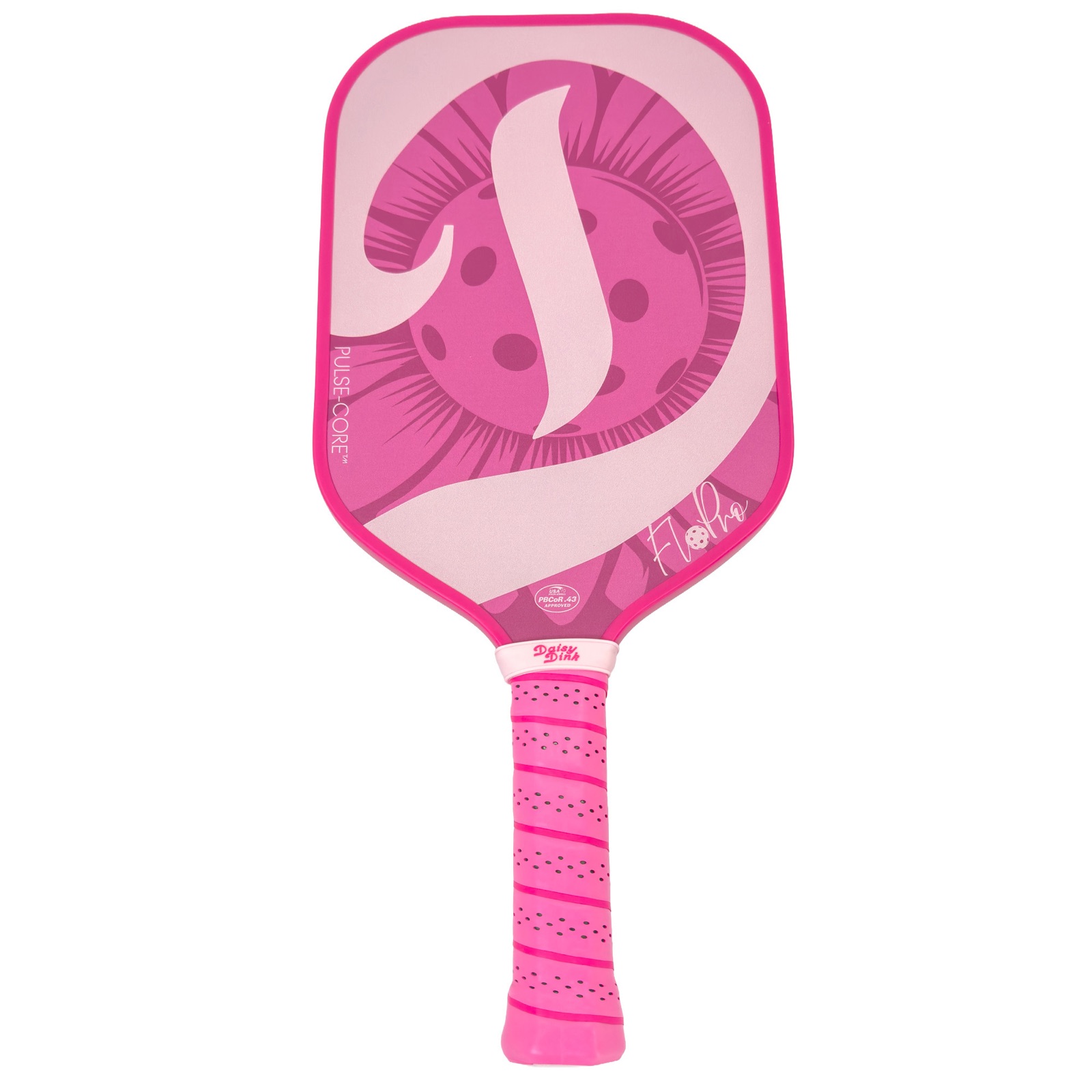
Recognizing the signs of a dead pickleball paddle is the first step to maintaining your best game. Don't let an underperforming paddle hold you back from enjoying those fantastic rallies! If you're experiencing any of these five signs, it might be time to explore your options. Thinking about paddle weight, core thickness (like a 16 mm honeycomb control paddle), and the type of carbon fiber face can help you choose a paddle that truly fits your play style. Remember, you can always ask a friend at open play to try out their paddle and get a feel for different types before making a decision. When you're ready to find your next trusty partner on the court, check out our selection of paddles like the Daisy Dink FloPro Pulse-Core Pro Paddle, designed with women pickleball players in mind. Happy dinking!
Women-owned, women-focused pickleball. We write about the gear, the game, and the culture. Live bold, play beautifully. 🌸
Keep reading

Join the conversation 🌸
Get The Daily Dink and weigh in every week.