

Does Paddle Weight Really Matter? (Spoiler Alert: Yes!)
Ever feel like your pickleball paddle just isn't quite right? Maybe your shots aren't landing where you want, or your arm feels tired after a long match. The culprit might just be your paddle's weight! Finding the right paddle weight isn't about picking the heaviest or lightest one on the shelf; it's about matching your paddle to your unique playing style, physical strength, and even your history with other sports. Let's dive into how to choose a paddle that feels like an extension of your arm.
Think of your paddle as a dance partner. You want one that moves with you, not against you. A paddle that's too heavy can lead to fatigue and slower reactions, while one that's too light might lack the punch you need for powerful serves and drives. It's a delicate balance, but don't worry, we're here to help you navigate the world of pickleball paddle weight!
Lightweight Paddles: Agility and Quickness
Generally, lightweight paddles weigh under 7.5 ounces. These paddles are fantastic for players who prioritize speed, agility, and quick hands at the net. If you love to dink, reset, and engage in fast volleys, a lighter paddle might be your new best friend.
Pros of a Lightweight Paddle:
- Faster Hand Speed: Essential for quick reactions during hand battles at the net.
- Increased Maneuverability: Easier to adjust your paddle face for tricky shots and defensive blocks.
- Less Arm Fatigue: Can be beneficial for players prone to elbow or shoulder issues, or during long playing sessions.
- Enhanced Finesse: Great for delicate dinks, drops, and touch shots where precision is key.
Cons of a Lightweight Paddle:
- Less Power: You'll need to generate more of your own power, which can be tiring for some players.
- Reduced Stability: Can feel less stable against hard-hit balls, leading to more vibration and potentially off-center hits.
- Less Put-Away Potential: May be harder to hit winners with significant pace.
Who might love a lightweight paddle? Players with a tennis elbow history, those who prefer a finesse game, or anyone looking to maximize their reaction time for quick exchanges.
Mid-Weight Paddles: The All-Arounder's Choice
Mid-weight paddles typically range from 7.5 to 8.2 ounces. This category is incredibly popular because it offers a fantastic balance of power and control. If you're looking for a versatile paddle that can handle a variety of shots and situations, a mid-weight option is often a great starting point.
Pros of a Mid-Weight Paddle:
- Balanced Performance: Offers a good mix of power for drives and stability for control shots.
- Versatility: Suitable for a wide range of playing styles and skill levels.
- Reduced Vibration: The added mass can help absorb impact, making it feel more comfortable on your arm.
- Good Feel: Many players find this weight range provides a satisfying feel for the ball.
Cons of a Mid-Weight Paddle:
- Not Specialized: While versatile, it won't excel in one area as much as a purely lightweight or heavyweight paddle.
- Can Still Cause Fatigue: For some players, especially those new to the sport, it might still feel a bit heavy over time.
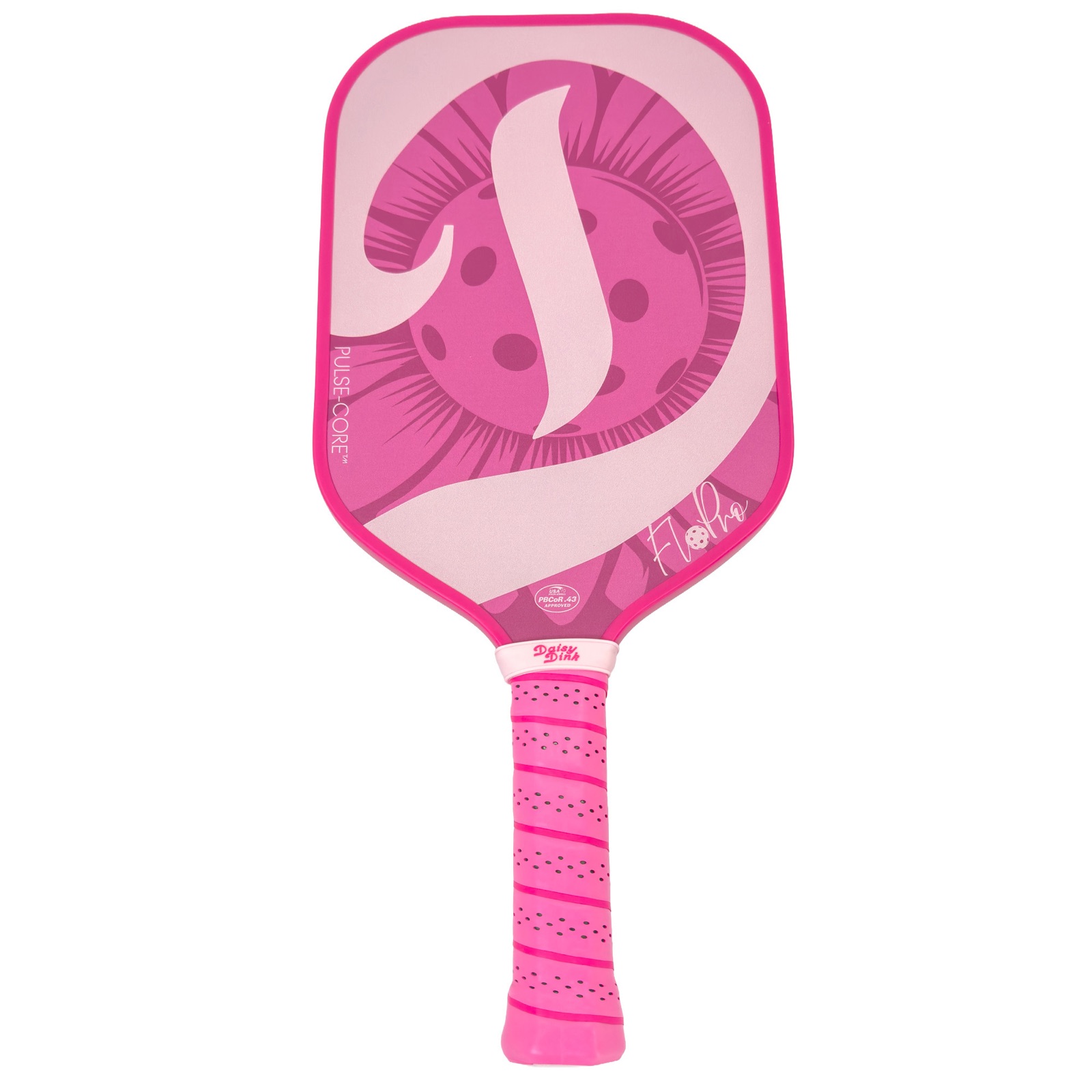
Who might love a mid-weight paddle? Beginner to intermediate players, those who want a good all-around paddle, or anyone unsure of their specific playing preference yet. Our Daisy Dink FloPro Pulse-Core Pro Paddle is a fantastic example of a mid-weight paddle designed for balanced play.
Heavyweight Paddles: Power and Stability
Paddles weighing 8.2 ounces or more fall into the heavyweight category. These paddles are all about power, stability, and absorbing pace. If you love to drive the ball, hit powerful serves, and want a paddle that feels solid on every contact, a heavier option might be for you.
Pros of a Heavyweight Paddle:
- Increased Power: The extra mass helps generate more pace on your drives, serves, and overheads.
- Enhanced Stability: Less susceptible to twisting on off-center hits, providing a more consistent feel.
- Absorbs Pace: Great for returning hard-hit balls, as the paddle's weight helps to counter the opponent's power.
- Comfortable for Power Hitters: Can feel more natural for players who like to swing big.
Cons of a Heavyweight Paddle:
- Slower Hand Speed: The increased weight can make it harder to react quickly at the net.
- Greater Arm Fatigue: More strenuous to swing, potentially leading to faster fatigue, especially in longer matches.
- Less Maneuverability: Can be harder to adjust for quick dinks and resets.
Who might love a heavyweight paddle? Stronger players who prioritize power, those with a tennis or racquetball background, or anyone who frequently plays against hard hitters.
Beyond the Numbers: Other Factors to Consider
While paddle weight is a crucial factor, it's not the only one. Other elements work in tandem to influence how a paddle feels and performs.
Grip Size
Your grip size is just as important as paddle weight for comfort and control. A grip that's too small requires more squeezing, leading to fatigue and potential injuries, while a grip that's too large can hinder wrist snap and feel awkward. Grip size depends on individual hand measurements, with common sizes ranging from 4 1/8 inches to 4 1/4 inches. Always aim for a grip that allows you to comfortably wrap your hand around it with your index finger of your non-hitting hand able to fit snugly in the gap between your palm and fingertips.
Core Thickness and Material
The core of a paddle, often made of polymer honeycomb, plays a big role. A thicker core (like 16mm or more) generally offers more control, a softer feel, and a larger sweet spot due to better energy absorption. A thinner core (e.g., 12-14mm) can provide more power and a firmer, more responsive feel, though with less control. Some paddles also incorporate a foam core around the edges to enhance the sweet spot and reduce vibration.
Paddle Face Material
The material on the paddle's face impacts spin and feel. Raw carbon fiber face paddles are known for their exceptional spin potential and control, helping you add topspin or slice to your shots with a precise feel. Fiberglass offers a good balance of power and a softer feel, while graphite is often associated with a crisp feel and good control.
Balance Point
Even two paddles of the exact same weight can feel different based on their balance point. A head-heavy paddle will feel heavier to swing and offer more power, while a more balanced or head-light paddle will feel lighter and more maneuverable.
How to Find YOUR Perfect Paddle Weight
- Try Before You Buy: The absolute best way to determine your ideal paddle weight and feel is to try different paddles! Head to your local pickleball courts during open play and ask to borrow paddles from others. Most pickleballers are happy to let you try theirs for a few points.
- Consider Your Experience: Beginners often benefit from a mid-weight paddle for its versatility. As you develop your style, you might lean towards lighter for finesse or heavier for power.
- Listen to Your Body: If your arm, wrist, or shoulder feels fatigued or sore after playing, your paddle might be too heavy, or your grip size might be off.
- Think About Your Game: Are you a dinker and a strategist? A lighter paddle might enhance your control. Are you a power hitter who loves to drive the ball? A heavier paddle could give you an an edge.
- Don't Be Afraid to Experiment: Your preferences might change as you grow in the sport. What feels good today might not be what you need in a year.
Conclusion: Your Paddle, Your Game
Choosing the right pickleball paddle weight is a personal journey. There's no one-size-fits-all answer, but by understanding the tradeoffs between power, control, and maneuverability, you can make an informed decision. Experiment, listen to your body, and most importantly, have fun out there!
Ready to upgrade your gear? Check out our Daisy Dink shop for high-quality paddles and accessories designed with women in mind!
Women-owned, women-focused pickleball. We write about the gear, the game, and the culture. Live bold, play beautifully. 🌸
Keep reading


Join the conversation 🌸
Get The Daily Dink and weigh in every week.